
How Bad Actors Exploit Chatbots for Counterfeiting: Same Trust Signal, Opposite Intent
A shopper messages what looks like a brand’s support account on Instagram, gets a fast, fluent, oddly specific answer about sizing and shipping, and orders with confidence. Nothing about the exchange feels automated in a way that raises suspicion, because by now, fluent and fast is exactly what a real brand chatbot feels like too. That’s the problem. The interaction pattern that makes legitimate bot commerce feel trustworthy is the same pattern counterfeit operations have learned to copy.
Brands didn’t create this vulnerability on purpose. They built conversational commerce because it works, cheaper than staffed support, available around the clock, good at handling routine questions. But every brand that normalizes “a bot answered instantly and got it right” also lowers a customer’s guard against the next bot that answers instantly, gets it right, and is selling something counterfeit.
Why This Isn’t Just a Detection Problem
Bank of America’s Erica has handled over 2 billion interactions for 42 million customers since launch. That kind of scale is exactly why fraudulent chatbots don’t need to be sophisticated to work, they just need to be indistinguishable from what customers already expect a good bot to feel like. Fraudulent bots automate the same fluent, responsive interaction pattern, then use social engineering tactics to tailor the conversation to each target, adjusting based on what the person says back, and operate continuously rather than during business hours.
The result is that counterfeit chatbot operations aren’t competing with security awareness, most people know counterfeits exist. They’re competing with a habit brands themselves installed: trust the bot if it responds well.
Where the Habit Gets Exploited
Amazon’s AI shopping assistant, Rufus, is explicitly barred from using the word “dupe” in responses. According to Business Insider, it was still found recommending counterfeit alternatives when shoppers asked for a “cheaper version” of a name-brand product, directing them toward replica listings nearly indistinguishable from the original. This wasn’t a fraudulent bot impersonating a brand. It was a brand’s own bot, doing exactly what it was trained to do (answer helpfully), in a way that happened to route customers toward counterfeit inventory.
The impersonation side of the problem is separate and, in some ways, further along. A 2016 Washington Post-affiliated study documented AI-generated fake accounts convincingly mimicking luxury brands like Chanel, Prada, and Louis Vuitton on Instagram, and a 2024 IC3 public service announcement found fraudulent accounts using chatbots to impersonate legitimate brands and celebrities to push counterfeit luxury goods and non-delivery scams. Both cases exploit the same underlying signal: a fast, fluent, on-brand-sounding response reads as legitimate, regardless of who or what is actually behind it.
For the shopper, the range of harm runs from financial loss to real safety risk, particularly with counterfeit goods that skip quality and safety controls entirely. For the brand, it’s reputational damage and eroded trust that extends beyond the specific transaction, once a customer has been burned by a fake “brand” chatbot, their confidence in the real one takes the hit too.
Rebuilding a Signal That Actually Distinguishes Real From Fake
The fix isn’t to abandon chatbot commerce. It’s to make the trust signal harder to counterfeit than the chatbot conversation itself.
A. Verified, brand-authenticated channels
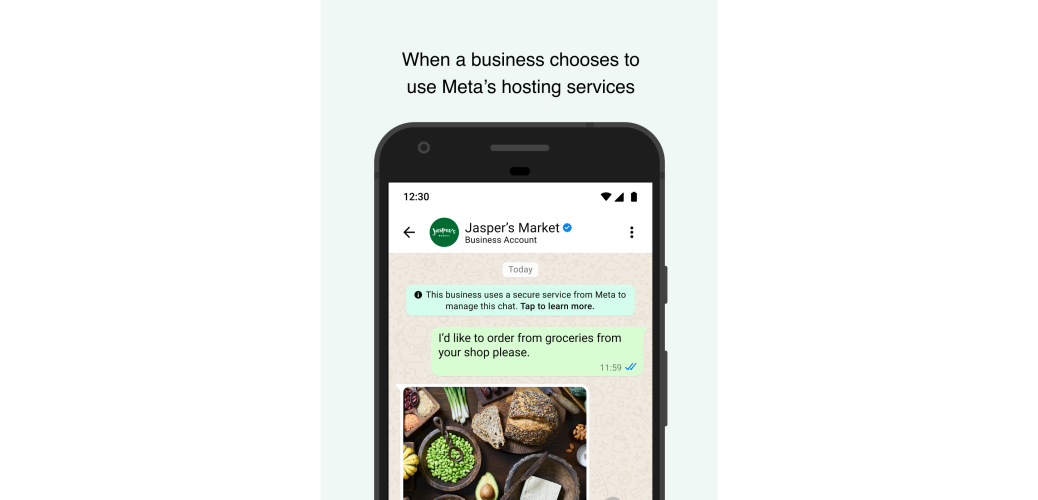
WhatsApp’s Business Verified program gives legitimate business accounts a visible checkmark next to the brand name, a signal that’s harder to spoof than conversational fluency. Nike and H&M both rely on this as a baseline authentication layer. A useful supplement is the “test chat” practice: security teams periodically send a controlled test message to confirm the verified bot is responding as expected, catching cases where a verified channel has been compromised or misconfigured rather than assuming verification alone guarantees integrity indefinitely.
 (Credit: WhatsApp Business)
B. Encrypted, brand-controlled communication channels
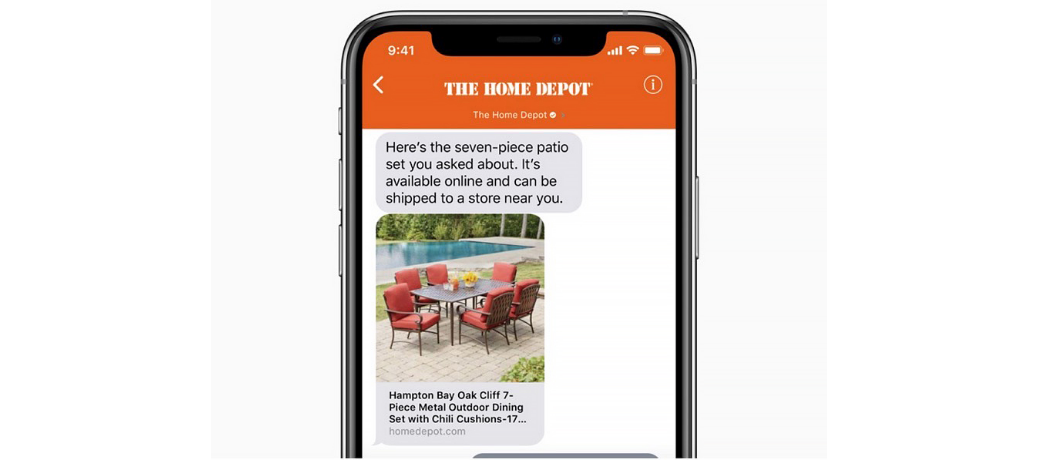
Apple’s Messages for Business authenticates every conversation at the channel level rather than relying on the customer to spot a checkmark. Home Depot and Discover both use it for service and transactional messaging. The distinction that matters here is structural: the trust signal is built into the channel itself, not into how convincing the bot’s responses sound, which is exactly the layer counterfeit operations can’t easily replicate.
 (Credit: Apple’s Messages for Business)
C. Bot detection at the point of interaction
Tools like Kasada’s bot detection work in real time to identify and block automated traffic before it reaches a customer, addressing the infrastructure side rather than relying entirely on customers to notice something is off.
D. Correlating fraudulent bot activity across channels
A case management system that ties together chatbot fraud reports from social media, email, and phone can surface repeat offenders operating across channels, a seller flagged in a private chat matched by email address or phone number to a phishing report from a different channel entirely. That correlation is what turns isolated fraud reports into a profile investigators and brand protection teams can act on, rather than each report standing alone. Hubstream’s role in this workflow is specifically that correlation layer: connecting flagged chatbot conversations to prior cases so a pattern becomes visible instead of getting rediscovered each time.
The Signal Problem Doesn’t Stay Solved
Verification badges and authenticated channels work today because they’re still harder to fake than a convincing conversation. That gap will keep narrowing as agentic shopping assistants and voice-based commerce become more common, interfaces where the visual checkmark that currently reassures a customer may not even be present. The practical question for brand protection teams isn’t whether current safeguards work now. It’s what replaces the visible trust signal once the interface stops having anywhere to put one.