
AI and Dupe Culture: When Brand Monitoring Was Built for the Wrong Signal
A brand protection analyst at a beauty company flagged a competitor’s product line not because the monitoring system caught it — but because a consumer mentioned both brands in the same TikTok comment. The names rhymed. The packaging told a similar visual story. The market positioning overlapped enough that buyers were asking which one was “the original.” No logo had been copied. No trademark had been reproduced. The automated monitoring had found nothing.
That is not an edge case. It is becoming the standard operating condition for a specific and growing category of brand confusion — one that most monitoring infrastructure was not designed to detect.
How Infringement Moved Past the Logo
For most of the history of brand protection enforcement, the core detection question was visual: does this product reproduce a registered mark without authorization? Logo detection, image matching, trademark watch services — the tooling was built for the case where a counterfeiter copies a protected visual element.
Generative AI has shifted the terrain of infringement. The current generation of look-alikes does not necessarily copy the logo. It copies the grammar of the brand: the naming cadence, the color relationships, the tone of the product narrative, the way a line positions itself against a category. Counterfeiters and copycat sellers now use the same tools available to legitimate marketers — generative image systems, A/B testing platforms, performance marketing analytics — to iterate toward confusion rather than away from it.
A name that tests well in brand recall often tests well because it sounds familiar. Familiar, in this context, frequently means it sounds like something that already has market trust. The result is a class of look-alike products that monitoring systems trained on logo-matching are not built to surface. The infringement is linguistic, phonetic, and structural. The detection infrastructure is visual.
Counterfeiters now use the same performance-marketing playbooks as legitimate retailers — A/B testing names, running localized ads, optimizing for platform discovery. On TikTok, hashtags like #dupe and #reps surface millions of posts, pushing look-alike listings higher in discovery feeds. Scam storefronts for luxury goods now mirror authentic brand sites closely enough that buyers have no reliable visual cue that they have left the original.
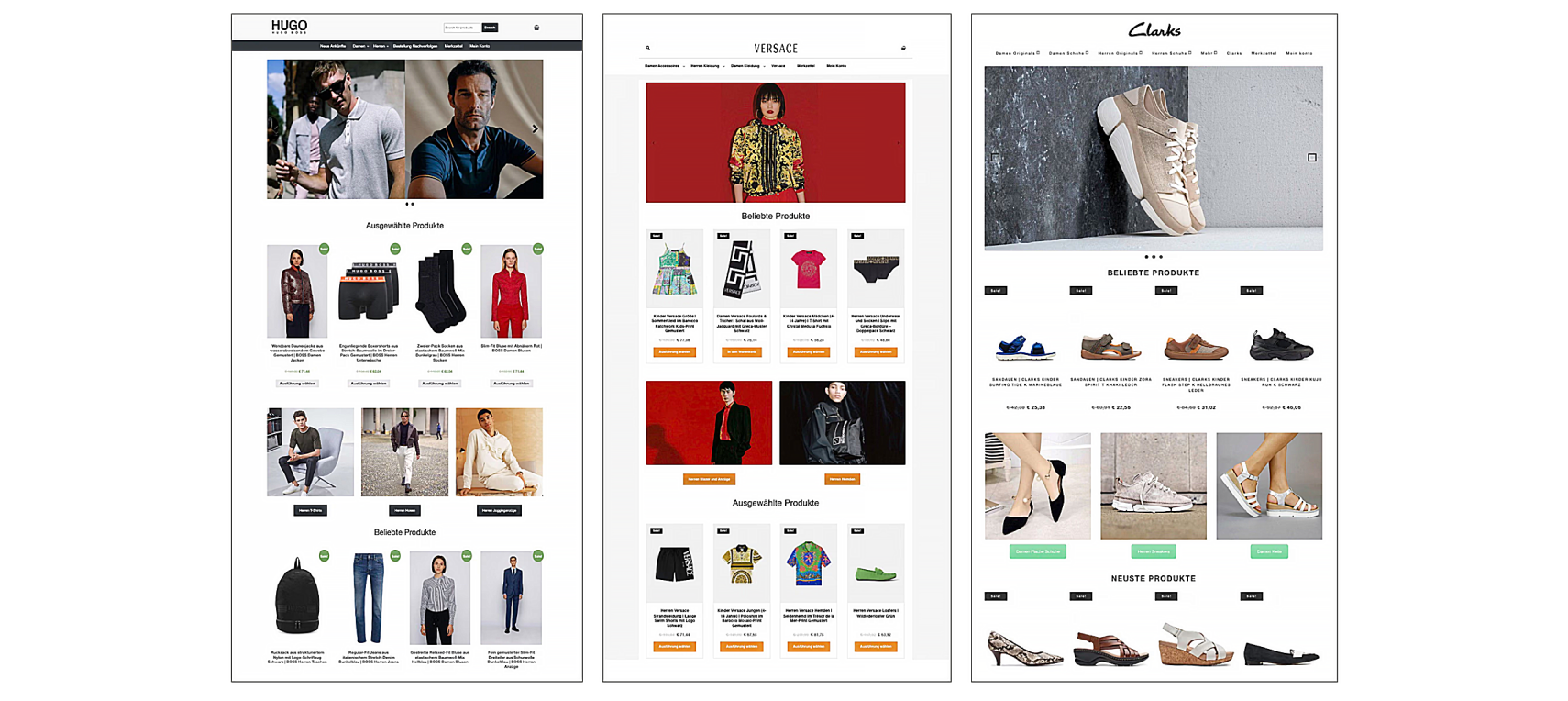
Scam Websites (Image Credit: The Guardian)
The scale matters as much as the method. A single bad actor with access to generative tools can test dozens of name and packaging variations simultaneously, across multiple marketplaces, at low cost. A monitoring infrastructure that resolves alerts one by one through takedown requests is processing the output of a system operating several orders of magnitude faster than the review cycle.
What Three Court Cases Reveal About Structural Mimicry
Three recent cases illustrate where courts are drawing lines — and what the evidentiary standard actually requires when structural mimicry reaches litigation.
CHANEL v. JNANEL
When CHANEL challenged JNANEL before the EUIPO, the board’s ruling did not turn on logos or packaging. It turned on phonetics. A single-letter difference between two names was ruled insufficient to eliminate the likelihood of consumer confusion when the names shared structural and acoustic similarity. The infringing element was not a visual reproduction — it was the way the name sounded when spoken, and the mental association that sound created.
For brand protection teams operating in multilingual markets, the implication is specific: trademark watch services that monitor new filings based on visual similarity alone will miss the category of infringement this case defines.
Lululemon v. Costco
Lululemon’s 2025 suit against Costco alleged not counterfeit manufacturing but trade dress infringement — the accumulation of look, feel, and positioning signals that collectively constitute brand identity. The disputed products included Scuba hoodies and ABC pants. Costco’s marketing drew explicit product comparisons, borrowing Lululemon’s associative value rather than its physical design.
The case is significant not because the outcome is certain, but because the threshold it tests has shifted. The question before the court is not whether Costco reproduced a Lululemon product. It is whether the systematic borrowing of brand-level associations — across naming, marketing language, and positioning — constitutes infringement. That is a structural question, not a visual one.
Benefit Cosmetics v. e.l.f. Cosmetics
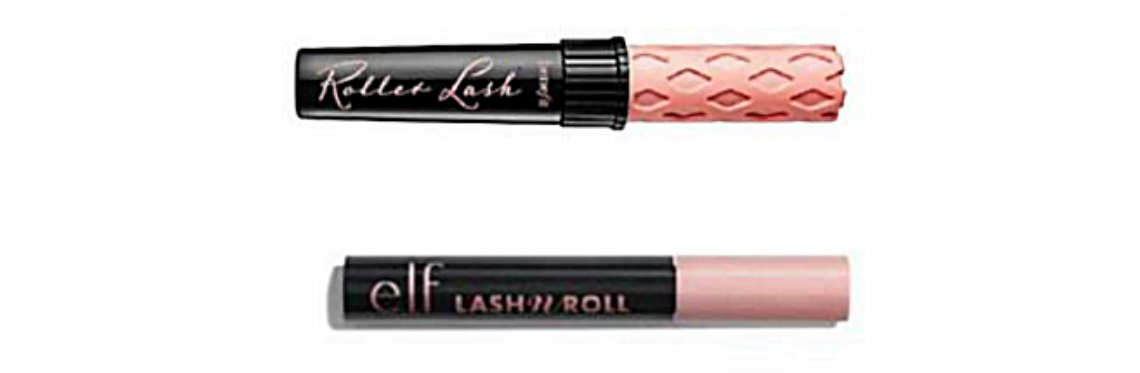
(Image Credit: Trademark Lawyer Magazine)
The court ruled against Benefit’s claim that e.l.f.’s product infringed its best-seller, finding no likelihood of confusion. The ruling is sometimes read as a limit on look-alike enforcement. It is more precisely a standard: when branding, packaging, and messaging remain distinctly differentiated, aesthetic similarity in a single dimension does not constitute infringement.
That standard clarifies the detection task. Structural mimicry that operates across multiple dimensions simultaneously — name, visual grammar, positioning language, and marketing context — creates more actionable confusion than mimicry in any one dimension alone. Courts will act where the overlap is structural and multidimensional. The monitoring question is therefore whether the current system can identify that overlap before it accumulates to the point of litigation.
The Monitoring System That Looks at the Wrong Signal
Most brand monitoring operates on a watch-list model: registered trademarks are checked against new filings, image similarity is compared against known brand assets, and flagged listings are reviewed for explicit trademark reproduction.
That model has a structural gap when the threat is phonetic and linguistic. A sound-alike brand name does not appear in a trademark filing until someone registers it. A look-alike product does not trigger image matching unless the visual element being matched is explicitly defined in the watch list. A seller account operating under a name that rhymes with a protected brand and mirrors its packaging aesthetic may pass every automated check without triggering a single alert.
The additional problem is evidence. Pursuing a structural mimicry claim requires documentation that the confusion is multidimensional — that the naming, visual presentation, and market positioning overlap in a way a consumer would reasonably find confusing. That evidence needs to be assembled systematically, not reconstructed after the fact from fragmented manual observations.
The question for brand protection teams is not whether the monitoring system is working. It is whether it is looking at the right signals — and collecting the right evidence to act on what it finds.
When One Look-Alike Should Open the Next Question
The standard response when a look-alike product or seller account is identified is a takedown request. The listing comes down. The case is recorded as resolved.
What that response does not examine is the infrastructure that produced the look-alike. A seller account using a phonetically similar brand name and mirroring the original’s packaging story is rarely operating in isolation. Platform account registrations, domain registration patterns, fulfillment infrastructure, and payment relationships often connect multiple look-alike operations run by the same underlying network. The look-alike that surfaces in a comment thread may be one of dozens generated by the same system, across multiple categories and platforms, in the same week.
A single look-alike investigated only to the point of takedown closes the visible symptom. The network that generated it continues.
The more productive investigative question, when a look-alike surfaces, is: what else is connected to this? Which other seller accounts share registration patterns with this one? Which other products in this category use the same naming convention? Where else has this domain structure appeared?
That shift — from reactive takedown to structural investigation — requires an environment where finding one look-alike becomes an entry point to the network, not a resolved case. Hubstream’s link analysis is built for that motion: connecting a detected look-alike to the seller accounts, domain registrations, and marketplace patterns that reveal coordinated confusion at scale, so the first detection opens the next question rather than closing the inquiry.
Questions Worth Examining in Your Own Operation
Before adjusting monitoring strategy, it is worth examining what the current system can and cannot see:
- Does your monitoring flag phonetic and naming-cadence variants, or only exact trademark strings and visual logo matches?
- When a look-alike listing is removed, does the process examine connected seller accounts and registration infrastructure, or stop at the takedown?
- How are sound-alike names identified before they accumulate consumer confusion? Does that process depend on a consumer or analyst noticing the resemblance manually?
- What evidence standard does your legal team need to pursue a structural mimicry claim? Is your monitoring generating documentation adequate for that standard?
- Which signals of structural brand confusion are currently visible in your data but not being systematically collected?
The answers will vary by organization. The underlying question is consistent: whether the monitoring model was designed for the infringement that exists now, or for the infringement that existed when the model was built.
The Detection Gap Comes Before the Legal Gap
The Benefit v. e.l.f. ruling is not evidence that structural mimicry is difficult to prosecute. It is evidence that courts apply a specific evidentiary standard — and that meeting that standard requires systematic detection, not occasional discovery.
Brand protection teams that identify look-alikes through manual observation, resolve them through individual takedowns, and treat each case as closed are operating a reactive model against a problem that compounds structurally. The look-alike found in a comment thread is the visible output of a process that has already run at scale. The enforcement action addresses the symptom after it has done its work.
The more useful question, when the next look-alike surfaces, is not how to remove the listing. It is what structure that look-alike belongs to, and how far that structure has already extended.
That question cannot be answered by a takedown request. It requires the ability to follow the inquiry after the first answer arrives.