
Amazon Haul Stopped Being an Experiment: What That Means for Brand Protection
When Amazon Haul launched in late 2024, brand protection teams could reasonably treat it as a side experiment: a discount storefront testing whether Amazon could compete with Temu on ultra-low prices. That framing no longer holds. By its first anniversary, Amazon had taken Haul out of beta, expanded it to more than 25 countries and regions, and begun rebranding it as “Amazon Bazaar” in several international markets. Amazon also shifted more Haul fulfillment into its own U.S. warehouse network, a move tied directly to the closure of the de minimis exemption that had made direct China-to-consumer shipping tariff-free.
None of that is a side project anymore. It is a permanent, growing surface inside the same platform where most brands already run their core Amazon presence, and it carries the same counterfeit dynamics that showed up in its first year.
What the Haul Format Still Gets Wrong
The “haul” as a shopping format, whether on Amazon, Temu, or elsewhere, works by flooding a feed with inexpensive items, many marketed as designer replicas or “compatible” alternatives to name brands. That format has not changed as Haul matured. What has changed is the assumption a shopper brings to it: a fringe discount app invites some skepticism, a feature living inside Amazon itself does not, particularly once the beta label is gone.
What This Looks Like on the Platform
- Fake Designer Handbags: Luxury handbag replicas sell for a fraction of retail. An authentic Coach Heart Crossbody Bag with Quilting retails for $350; a near-identical knockoff has listed on Amazon Haul for $6.98.
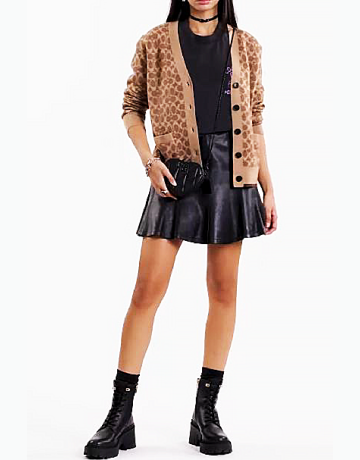
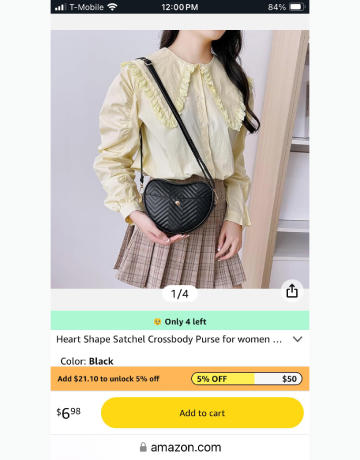
Heart Shape Crossbody Bag from Amazon Haul
- Low-Cost Electronics: Knockoff accessories mimic official names while delivering inferior quality, sometimes creating safety risk. A genuine Apple Watch starlight sport band lists at $49; a “compatible” version on Amazon Haul has listed for $1.99.
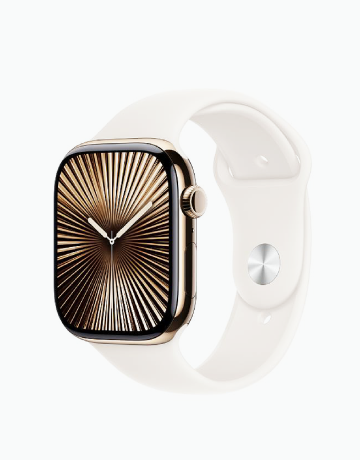
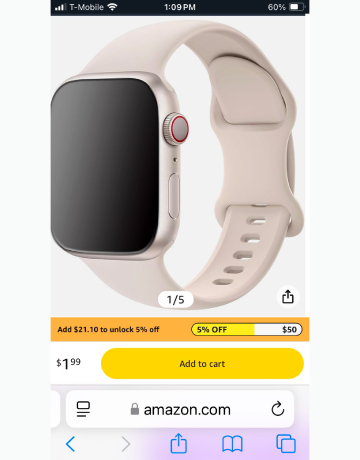
Apple Watch Starlight Sport Band from Amazon Haul
These listings rely on convincing product photography, aggressive pricing, and descriptions vague enough to avoid an explicit trademark claim. That combination is harder to catch on a mobile-first, feed-based interface than on a traditional search results page, where a brand’s own listing sits beside the counterfeit for comparison.
Why Mainstreaming Changes the Threat, Not Just the Scale
The surge of counterfeit and knockoff activity on Haul-style platforms was always a threat to brand equity. What mainstreaming adds is a second, quieter problem: normalization on Amazon’s own trust signal.
Erosion of Brand Equity: “Superfakes,” counterfeits that closely resemble genuine products, damage reputation when consumers unknowingly buy them and blame the original brand for quality or safety issues they never actually experienced.
Legitimizing Counterfeit Alternatives: A haul feed presents replicas alongside legitimate products with no visual distinction, training shoppers to treat “close enough” as an acceptable substitute. That erosion of the genuine-versus-fake distinction happens regardless of which company operates the feed. It happens faster when the feed carries Amazon’s name and is no longer labeled experimental.
Legal and Financial Strain: Monitoring a mobile-first, constantly rotating feed format consumes investigative time that a static storefront never required, and that cost now applies to a permanent feature rather than a pilot brands could reasonably deprioritize.
What Brands Can Actually Do About It
-
Register With Brand Protection Programs: Enrollment in the Amazon Brand Registry extends to Haul listings, and the “Report a Violation” tool works the same way it does for standard Amazon storefronts.
-
Report Directly Inside the Haul App: Under “Product Details,” select “Report an Issue with this product or seller,” then “This product or content is illegal, unsafe or suspicious,” followed by the specific violation, IP misuse or counterfeit, to flag a listing.
-
Use Monitoring Tools Built for Feed Formats: The Amazon Seller App lets brands scan product names to surface similar listings, but feed-based interfaces reward monitoring cadence over one-time sweeps, since listings rotate faster than a traditional storefront.
-
Treat Consumer Reports as an Early-Warning Channel: A clear, visible path for customers to flag suspected counterfeits, web portal, email, or in-app, often surfaces a pattern before internal monitoring does, particularly for products aimed at price-sensitive, first-time buyers who may not know a formal reporting channel exists.
-
Push for Platform-Level Verification, Not Just Takedowns: Individual listing removal does not address why the same seller or template resurfaces days later. Brands with enough volume on the platform have more leverage than they typically use to push Amazon toward stricter seller verification specifically for Haul-format listings.
The Question Brand Protection Teams Should Be Asking Now
A year ago, the operative question was whether Amazon Haul would stay small enough to ignore. It didn’t. The current question is different: does your monitoring program treat Haul and Bazaar listings as a distinct, permanent surface with their own cadence and detection logic, or are they still being checked occasionally as an afterthought to core Amazon monitoring? AI-driven detection tools that flag inconsistencies in branding, pricing, or seller behavior across a fast-rotating feed only help if someone has decided this surface deserves the same continuous attention as the flagship storefront.
Amazon Haul’s growth answered one question, whether a discount feed format could scale inside a major platform. It clearly can. The harder question, whether brand protection programs scale their attention at the same rate the surface scales, is still open for most teams.